Trying to conceive
When to take a pregnancy test, and how to read the result
Waiting to test is hard, especially if you’ve been trying for a while or you’re in the middle of treatment. Most home tests work from the first day of a missed period. Testing earlier is possible, but a negative result is then less reliable.1
- Most tests can be used from the first day of a missed period.
- Some tests can be used earlier. A negative result then doesn’t rule pregnancy out.
- A positive result is almost certainly right. A negative one can be a false alarm if you tested too soon.
- If you’ve had IVF, test on the day your clinic gives you.
When can you take a pregnancy test?
The NHS says you can do most pregnancy tests from the first day of your missed period. If you’re not sure when your period is due, test at least 21 days after you last had unprotected sex.1
Tests work by looking for a hormone called hCG in your urine. Your body starts making it once an embryo has implanted, and the amount rises over the following days. Test too soon and there may not be enough hCG to show up yet.
Can you test before a missed period?
Some tests are made to pick up smaller amounts of hCG, so they can be used before your period is due. The NHS notes that if you test early, a negative result is less reliable.1 If you get a negative but still think you might be pregnant, wait a few days and test again.
Makers describe how sensitive a test is in mIU/mL. A lower number means the test can detect less hCG. It’s worth reading the packet to see what the maker says about how early you can test, and treating that as the earliest possible date, not a guarantee.
How to get the clearest result
- Follow the instructions exactly. Home tests are reliable when you do.1 Check how long to wait before reading the result, and don’t read it after that time.
- Try first thing in the morning if you’re testing early. Your urine is usually more concentrated, which may help. You can test at any time of day from a missed period.1
- Check the date on the packet. An out-of-date test may not work.
- Keep a second test. If you need to test again a few days later, it helps to have one to hand. Many packs contain two.
What if you’re having IVF?
Your clinic will tell you which day to test. Follow their date, even if it’s tempting to test sooner. If you’ve had a trigger injection that contains hCG, it can stay in your body for some days and may show as a positive on a test that is taken too early. Ask your clinic how long to wait, and what to do after a result.
Whatever the result, tell your clinic. They will usually want to arrange a blood test or the next step.
What should you do after a result?
- Positive: a positive result is almost certainly correct.1 Book a visit with your GP or midwife. If you’re having treatment, tell your clinic.
- Negative, but your period hasn’t come: wait a few days and test again. If it’s still negative and your period hasn’t arrived, speak to your GP.1
- Negative after treatment: contact your clinic for support and to talk about next steps. A negative result can be very hard, and you don’t have to deal with it alone.
One option if you need a test
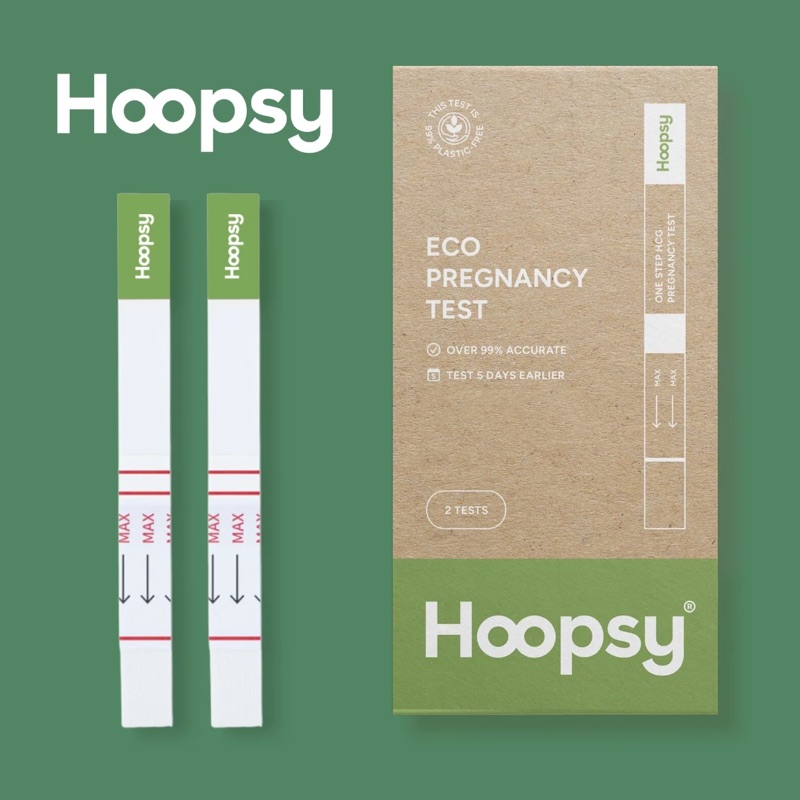
If you’re looking for a test, one we know of is Hoopsy’s eco-friendly pregnancy test. It comes as a pack of two tests, and the price at the time of writing is £9.99 with free shipping. The maker says it detects hCG at 20 mIU/mL, can be used up to 5 days before a missed period, and ships discreetly. Those details come from the maker, and we haven’t tested the product. Remember the earlier you test, the less reliable a negative result is.
We may earn a small commission if you buy through this link. It doesn’t change your price. This isn’t medical advice. If you’re worried about your health, speak to your GP, pharmacist or midwife.